Gokyo Valley Trekking
Destination
Nepal
Regions
Everest
Activity
Trekking/Hiking
Accomodation
Hotel (Kathmandu) / Local Teahouses (Trek)
Transportation
Hiace & Domestic flights
Duration
15 Days
Trip Grade
Strenuous
Altitude
5360 m
Best Season
March-May & Sept-Nov
Start/End Point
Lukla/Lukla
| Destination | Region | Activity | Accomodation | Transportation |
|---|---|---|---|---|
| Nepal | Everest | Trekking/Hiking | Hotel (Kathmandu) / Local Teahouses (Trek) | Hiace & Domestic flights |
| Duration | Trip Grade | Altitude | Best Season | Start/End Point |
| 15 Days | Strenuous | 5360 m | March-May & Sept-Nov | Lukla/Lukla |
The Gokyo Valley Trek is an immersive journey through Sagarmatha National Park, a UNESCO World Heritage Site, that offers all the drama of Everest’s scenery without the heavy foot traffic of the classic EBC route. It is a 12 to 14-day trek stretching roughly 110 to 120 kilometers through lush forests, vibrant Sherpa villages, and right up to the shimmering turquoise Gokyo Lakes, situated at around 4,790 meters.
Your Gokyo journey kicks off with a mountain flight from Kathmandu to Lukla, one of the most scenic air routes in the world. From there, the trail leads through Phakding and Namche Bazaar, the lively Sherpa hub. After an acclimatization day in Namche, the path winds past Dole and Machhermo, climbing gradually toward the ethereal Gokyo Valley. Here, you walk alongside the mighty Ngozumpa Glacier—the largest glacier in the Himalayas—and witness the unreal reflection of Cho Oyu on the surface of Gokyo’s third lake.
A major milestone of this adventure is climbing Gokyo Ri (5,360 m), a viewpoint rewarding you with a 360-degree panorama of the world’s tallest peaks: Everest, Lhotse, Makalu, Cho Oyu, and more. You can then descend via Renjo La Pass (5,340 m), which adds a wild, adventurous twist as the trail links to Lunde and loops back toward Namche and Lukla. Along the way, you pass centuries-old Buddhist monasteries, spin prayer wheels beside colorful mani walls, and may even witness local festivals like Lhosar, Mani Rimdu, or Dumji. For added adventure, you can extend the trek across Cho La Pass (5,420 m) to join the main Everest Base Camp trail.
The flight from Kathmandu to Lukla—the legendary gateway to the Everest region—is an adventurous start to your Gokyo Trek. Boarding early in the morning when skies are clear and high winds are calm, the 35-minute flight takes off from Tribhuvan International Airport and flies straight into the heart of the mountains, offering aerial views of deep valleys, green ridges, and the Dudh Koshi River before landing at Lukla’s Tenzing-Hillary Airport (2,845 m).
Pro tip: Grab a window seat on the right side of the plane (facing northeast) on the way in for front-row views of Himalayan giants such as Everest, Lhotse, Cho Oyu, and Makalu.
Perched at 3,440 meters in an amphitheater-shaped bowl, Namche Bazaar is the soul and beating heart of the Khumbu region. Situated between the slopes of Sagarmatha National Park, the air feels immediately different here, filled with fluttering prayer flags and the quiet hum of trekkers and locals. From Namche’s ridges, you are treated to views of Kongde Ri (6,187 m) and Thamserku (6,608 m), with Everest, Lhotse, and Ama Dablam visible on clear mornings. The village is a cozy maze of teahouses, bakeries, and vibrant shops. Arriving on a Saturday lets you experience the famous local market where traders barter goods, and visiting the Sherpa Culture Museum offers deep insight into local mountaineering history and Buddhist traditions.
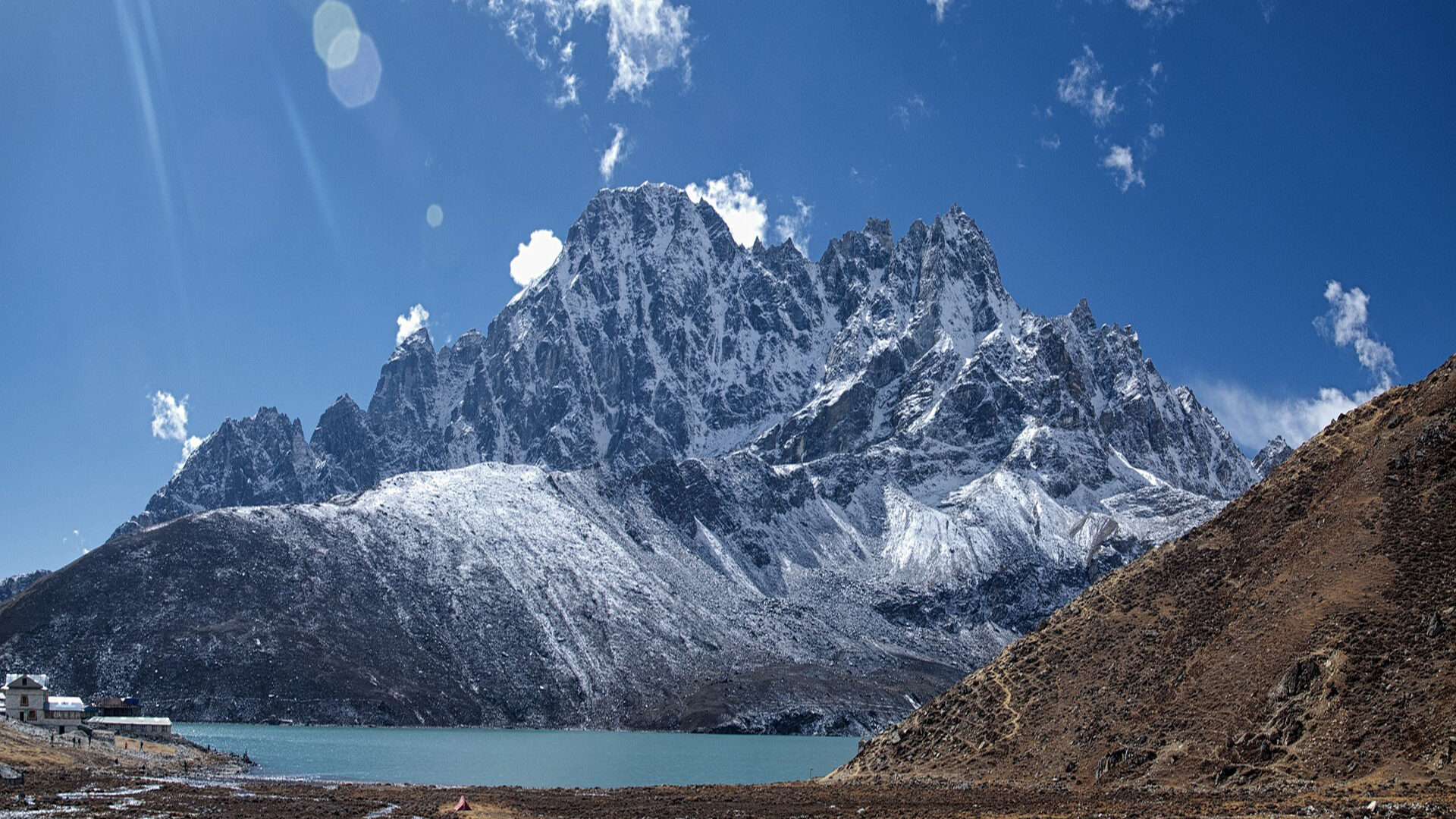
Situated between 4,700 and 5,000 meters, the Gokyo Lakes form one of the highest freshwater lake systems in the world, consisting of six main glacial lakes including Gokyo Cho (Dudh Pokhari), Thonak Cho, and Gyazumpa Cho. Beyond their visual beauty against snow-draped peaks, the lakes hold immense spiritual significance. Revered for centuries by Hindu and Buddhist pilgrims as the sacred home of Nag Devata (the Snake God), devotees travel here during the Janai Purnima full-moon festival to take a holy dip in Dudh Pokhari to wash away sins and receive blessings. Ecologically, the lakes are fed by meltwater from the Ngozumpa Glacier and serve as a vital freshwater reservoir for fragile alpine flora and fauna.
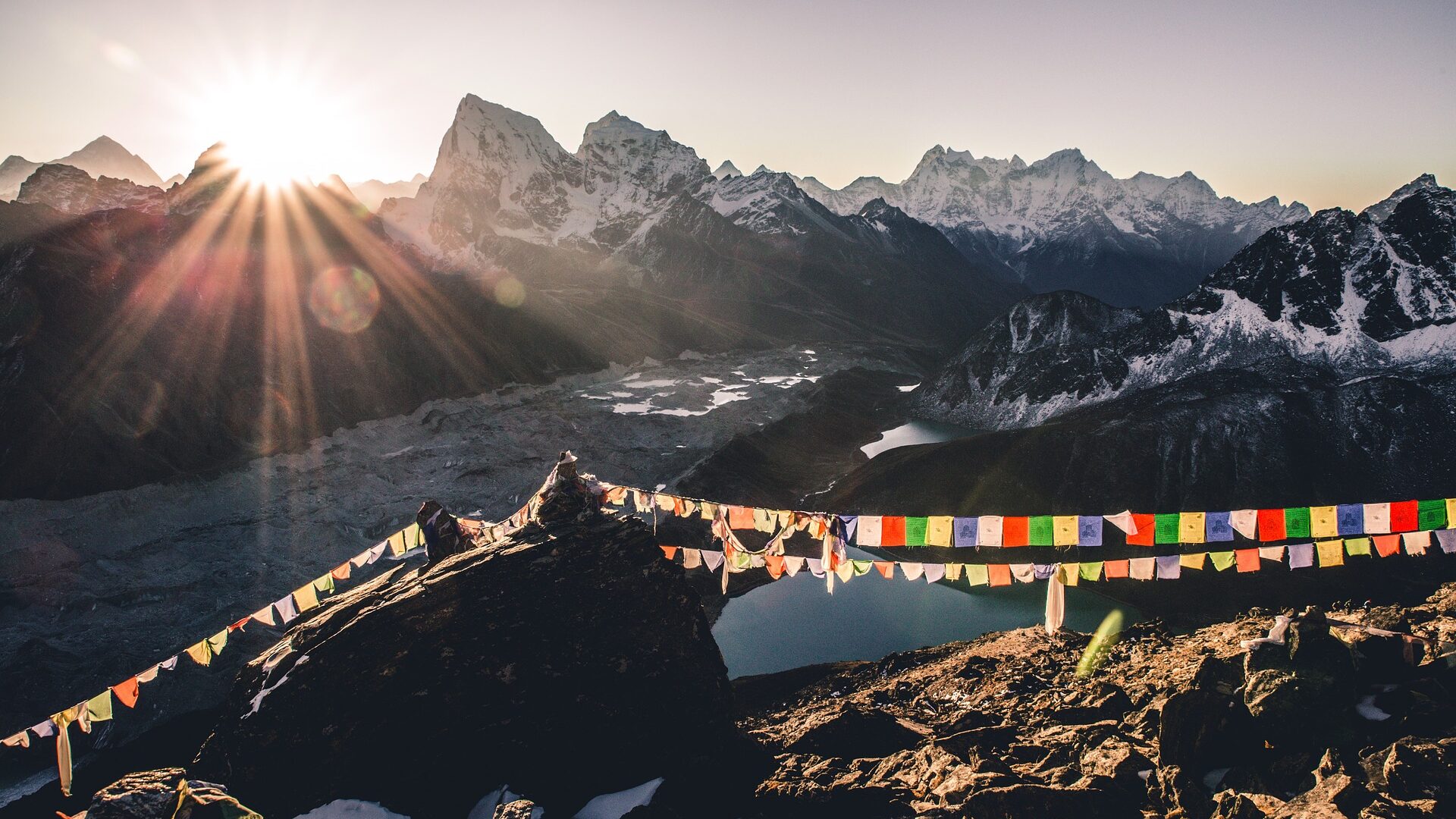
Rising to 5,357 meters just west of the Ngozumpa Glacier, Gokyo Ri offers an unobstructed 360-degree panorama of Mount Everest (8,848 m), Lhotse (8,516 m), Makalu (8,463 m), and Cho Oyu (8,201 m) with the turquoise lakes resting below. Starting before dawn, the 2 to 4-hour climb winds along rocky moraines and thin air to reach the top in time to watch the first morning light spill across Everest. Unlike the busier Kala Patthar viewpoint, Gokyo Ri feels quieter, more personal, and deeply serene.
The landscape transforms dramatically as you gain height. Starting in lush rhododendron, pine, hemlock, fir, and juniper forests around Phakding and Namche (2,600 to 3,500 m)—which light up in bright pink and red blooms during spring—the trees thin out near Dole and Machhermo into alpine meadows scattered with dwarf juniper and mountain grasses. Above 4,000 meters, the terrain turns into raw glacial moraines, scree slopes, and icy lake basins along the Ngozumpa Glacier. With patience, you may spot Himalayan tahr, musk deer, or rare wildlife, while the skies host Impeyan pheasants (Himalayan monal), snow cocks, blood pheasants, and alpine choughs.
The standard package for the 14-Day Gokyo Valley Trek in 2026/2027 costs approximately USD 1,490 per person. This covers teahouse accommodation, meals, a licensed trekking guide, local ground transport, and all required national park permits. Personal choices—such as hiring a porter, guide/porter tips, hot showers, Wi-Fi, and device charging—are not included in the standard base cost. It is advisable to carry an extra USD 200 to 300 in local cash for personal comfort, unexpected emergencies, or souvenirs. Booking early is essential for peak spring and autumn seasons when flight and lodge demand is highest.
Two main official permits are required before setting out on the trail:
Khumbu Pasang Lhamu Rural Municipality Entrance Permit: NRs 3,000 per person (collected upon entry in Lukla).
Sagarmatha National Park Entry Permit: NRs 3,000 per person (grants access to the protected UNESCO World Heritage area).
Both permits are included and fully arranged in advance when booking a package with a registered agency like Nepal Trekking Experts.
The trek is moderately challenging. It requires no technical climbing skills or rope work, but demands good physical stamina, leg strength, and mental grit. You will walk 5 to 7 hours a day over terrain that evolves from friendly forest paths and suspension bridges to steep stone steps, loose scree, and windy ridgelines near Gokyo Ri. As long as you are in good physical shape, enjoy long mountain walks, and pace yourself carefully, this trek is very doable.
Climbing above 3,000 meters means dealing with thinner air, and by 3,500 to 4,000 meters, Acute Mountain Sickness (AMS) becomes a real consideration regardless of fitness. Symptoms like headaches, fatigue, nausea, loss of appetite, or dizziness are your body’s signal to slow down and adapt. Ignoring symptoms can lead to severe conditions like HAPE or HACE. Prevention relies on gradual gains, taking built-in acclimatization rest days in Namche Bazaar and Gokyo, staying hydrated (3 to 4 liters of water daily), avoiding alcohol, and walking at a steady pace. Guides carry pulse oximeters to monitor blood oxygen levels and keep Diamox available for emergency use under proper guidance.
The prime seasons are Spring (March to May) and Autumn (September to November). Spring brings blooming rhododendrons, warmer days, and clear views, while Autumn offers the crispest skies, dry trails, and crystal-clear visibility across the high peaks.
March: Winter’s residual cold remains with crisp air, clear mornings, lighter trail traffic, and snow/ice patches on higher elevations.
April (Peak Spring Month): Temperate weather, dry trails, brilliant blue skies, blooming rhododendron woods, and high mountain visibility.
May: Warm days, lush greenery, active mountain wildlife, longer daylight hours, and comfortable walking conditions with occasional afternoon haze.
September: Post-monsoon freshness, lush green valleys, roaring waterfalls, wildflowers, and progressively clearer skies from mid-month.
October (Best Month of The Year): Peak trekking conditions featuring dry trails, stable weather, comfortable days, and the absolute sharpest, clearest mountain views of the year across Everest, Lhotse, Makalu, and Cho Oyu.
November: Dry, crisp atmosphere, low humidity, clean air, stable walking conditions, and clear sunrises from Gokyo Ri, with cold morning and night temperatures.
Yes, trekking in winter (December to February) is entirely possible and offers a quiet, peaceful experience away from peak crowds. The scenery features snow-covered landscapes, frozen lakes, and clear blue skies. However, daytime temperatures at high altitudes sit near 0°C, and nights drop to -15°C or lower. You must prepare for icy trails, shorter daylight hours, potential flight delays to Lukla, and carry heavy winter gear.
Monsoon trekking (June to August) is possible but challenging. Trails below 3,500 meters experience heavy rain, mud, and leeches, while afternoon cloud cover frequently blocks mountain views. Flights to Lukla are more susceptible to weather delays, requiring flexibility and good rain protection.
Hiring a licensed guide and porter is essential for safety, navigation, and physical comfort along steep, high-altitude terrain.
Licensed Guide: Approximately USD 35 per day (covers guide salary, food, lodging, and official insurance).
Porter: Approximately USD 25 per day (carries up to 20 kg of luggage). Additional porter transport logistics fees may apply depending on the itinerary.
Tipping: Customary tips at the end of the trek average around 15% to 20% of the total service cost based on satisfaction.
Booking requires a 10% trip deposit along with a copy of your passport and flight details. Deposits can be submitted securely online, generating an instant email receipt, with the remaining package balance payable upon arrival in Kathmandu before starting the trek.
Engage in regular cardio, trail running, strength training, or loaded pack hikes before your trip.
Partner with a professional local team with experienced, English-speaking, high-altitude guides.
Maintain a slow, steady pace (“bistari, bistari”) and drink 3 to 4 liters of clean water daily.
Practice the golden rule: “Hike higher, sleep lower” during acclimatization days.
Pack smart in versatile, lightweight layers and avoid alcohol or smoking on the ascent.
Maintain travel flexibility in case of Lukla flight delays due to weather. Emergency helicopter options (approx. USD 500 per person one-way) or overland jeep routes via Tham Danda/Paiya to Salleri exist as backup alternatives.
During high peak seasons (mid-March to mid-May and mid-September to mid-November), Lukla flights may operate out of Ramechhap Airport (Manthali).
Teahouses provide cozy, simple lodging along the route. Rooms are typically basic twin-sharing spaces with wooden beds, foam mattresses, and pillows (a sleeping bag rated to -10°C/-15°C is required). Private rooms with attached baths are common up to Namche, while higher lodges feature basic rooms with shared squat or Western-style toilets. The social heart of every teahouse is the central dining hall, kept warm in the evening by a central stove fueled by dried yak dung.
Gas or solar-heated hot showers are available at lower and mid-elevation teahouses for USD 3 to 6 per shower. At higher elevations where running hot water is limited, packing wet wipes, travel toiletries, and a quick-dry towel is recommended.
Teahouses serve freshly prepared meals daily. Breakfast options include porridge, eggs (boiled, fried, omelette), pancakes, toast, chapatti, and hot drinks. Lunch and dinner feature Dal Bhat (rice, lentil soup, and vegetable curry), momos, noodles, fried rice, pizza, and pasta, alongside local Sherpa items like butter tea and tsampa. Carrying personal snacks like nuts, chocolate, and energy bars provides useful mid-hike fuel.
To reduce plastic waste and protect the fragile mountain environment, buying bottled water is discouraged. Instead, purchase boiled water from teahouses or fill reusable water bottles from local taps or streams and treat the water using purification tablets, UV devices, or micro-filters.
The trek includes a scenic 35-minute flight between Kathmandu (or Ramechhap during peak season rerouting) and Lukla. Flights depart early in the morning to take advantage of stable mountain weather before afternoon winds build up.
NTC (Nepal Telecom) and Ncell SIM cards work along the trail, with NTC generally offering superior signal coverage in upper Khumbu locations. SIM cards can be purchased in Kathmandu using a passport copy and visa details.
Wi-Fi is available at many teahouses for USD 3 to 5 per session or via prepaid cards (like Everest Link). Signal speeds naturally slow down at higher elevations.
Teahouses utilize solar power or micro-hydro electricity. Device charging (power banks, phones, camera batteries) is available in common dining rooms for a small fee of USD 2 to 5 per device. Bringing a high-capacity portable power bank and plug adapters (types C, D, M) is strongly advised.
Thermal tops and bottoms (2-3 pairs)
Insulating fleece jacket and high-loft down jacket
Waterproof and windproof outer jacket and pants
Lightweight, moisture-wicking shirts (4-5) and quick-dry trekking pants (2-3)
Warm beanie, sun hat, and insulated gloves
Quick-drying, moisture-wicking underwear
Sturdy, waterproof, broken-in trekking boots
Wool or synthetic trekking socks (5-6 pairs)
Lightweight sandals or sneakers for teahouses
30L–40L daypack with rain cover
Four-season sleeping bag rated for -10°C to -15°C
Foldable trekking poles and reusable water bottles/purification methods
Headlamp with spare batteries and UV sunglasses
Personal toiletries (wet wipes, quick-dry towel, sunscreen, lip balm, sanitizer)
First-aid kit with personal prescriptions and altitude medication
High-energy snacks, power banks, and plug adapters
Yes, travel insurance is mandatory for this trek. Because the route reaches above 5,000 meters over two weeks of high-altitude walking, your policy must explicitly cover high-altitude trekking above 5,000 meters, emergency medical rescue, and helicopter evacuation costs. Verify that your provider offers direct payment processing to local emergency services.
Tourist visas-on-arrival are easily obtained at Tribhuvan International Airport in Kathmandu via digital kiosks. Visas are available in 15-day (USD 30), 30-day (USD 50), or 90-day (USD 125) options. Ensure your passport remains valid for at least 6 months beyond your entry date.
The official currency is the Nepalese Rupee (NPR/NRs). While credit cards and ATMs are widely available in Kathmandu (with 3-4% card surcharges or NRs 500 ATM fees), the trekking trail beyond Lukla operates strictly on cash. Withdraw all necessary cash in Kathmandu before setting off on the trek.
Booking with Earth Matter Treks & Expedition Nepal connects you directly with native Sherpa guides and local professionals born and raised in the Everest region. With over a decade of hands-on experience, government certifications (TAAN, NTB, NMA), and rigorous high-altitude safety training, our team delivers seamless logistics, transparent pricing, free rental gear (sleeping bags, down jackets), and authentic Himalayan hospitality from start to finish.
Copyright 2024 Earth Matter Treks & Expedition Nepal. All rights reserved.